
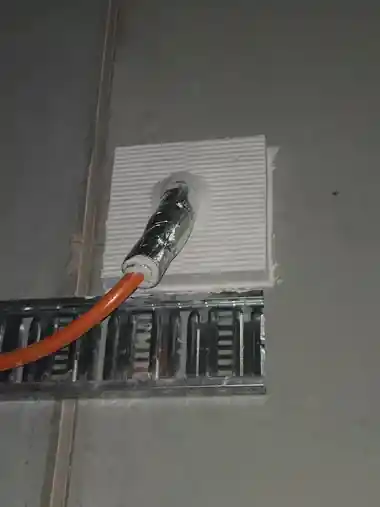
On a typical mid-rise job there can be thousands of penetrations through fire-rated walls and slabs, from plumbers, electricians, mechanical, data and fire services. Each one has to be sealed with a tested system. A passive fire register (often called a penetration register) is how you prove each one was done properly.
What goes in a register
- A unique ID matching the label fixed next to the seal.
- Location: level, grid or room, and which wall or slab.
- Element type and FRL, for example a 120-minute plasterboard wall or a 200 mm concrete slab.
- Service: pipe material and diameter, cable bundle or duct.
- Product and tested system, with the test report or assessment reference.
- Installer, date and photos taken before and after sealing.
Why it matters
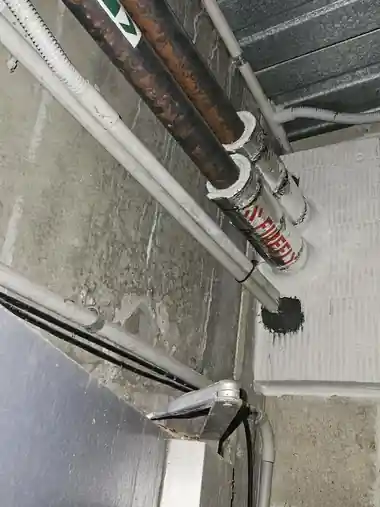
Certifiers want evidence that fire-resisting construction was installed as designed before they issue an occupation certificate. In NSW, fire safety measures also have to be checked and certified on an ongoing basis through fire safety statements. AS 4072.1 covers the components used to seal service penetrations and how they are identified. A complete register with labels and photos makes inspections quick.
Without a register, the only way to prove a seal is to open up ceilings and risers. On defect inspections, unlabelled or wrongly sealed penetrations are one of the most common items raised.
Common problems we fix
- Expanding foam or silicone used instead of a tested product.
- Collars that are the wrong size for the pipe, or fixed to the wrong side.
- Cables added after sealing that punch through the batt.
- No labels, so nobody can tell what is compliant.
- Different trades using different brands, with no single record.
One contractor, one register
The simplest approach is to have a single passive fire contractor seal every trade's penetrations. They label each one and hand over one register with photos and test references. That is how we run penetration packages: tested systems for each service, labelling as we go and a register at handover alongside our installation certificate.
Need this priced?
Send your drawings, fire engineering report or a few photos. We'll come back with a fixed quote, the tested system we'd use, and an installation certificate at handover.