
What is passive fire protection?
Passive fire protection is the built-in part of a building's fire safety: fire-rated walls, floors and ceilings that divide the building into compartments, plus the seals and coatings that keep those compartments intact. It works without any alarm, sprinkler or person switching it on.
Every pipe, cable, duct or conduit that passes through a fire-rated wall or floor creates a penetration. Left unsealed, it lets fire and smoke move between compartments. Ary Fire seals each penetration with a system tested for that exact service and substrate, so the wall or floor keeps its fire resistance level (FRL). We are a specialist passive fire contractor based in Cronulla, and our own crew does the work.
Our passive fire services
Pipe penetrations
Fire collars, wraps and sealants for PVC, copper, steel and lagged pipes, including sprinkler mains and drops, stack pipes through slabs and insulated refrigerant lines.
Cable and conduit penetrations
Coated fire batts, intumescent mastics and wraps for cable trays, cable bundles and conduits through blockwork, plasterboard walls and slabs.
Duct penetrations and service enclosures
Sealing around ducts and fire-rated enclosures around service boxes and mixed services where they pass through fire walls.
Joints and large voids
Flexible barriers and curtains for head-of-wall joints and large openings, and board enclosures and fire-stopping mortars where the system calls for them.
Riser and compartment wall sealing
Full penetration sealing packages for services risers, plant rooms, carparks and corridor fire walls, including remediation of non-compliant or missing seals.
Systems we install
| Trafalgar | FyreCOLLAR, FyreFLEX sealant, FyreBATT and SuperSTOPPER for pipes, cables and mixed bundles |
|---|---|
| Firefly | Flexible barriers and curtains for head-of-wall joints and large voids |
| Promat | PROMATECT board enclosures and load-bearing fire-stopping mortars |
| Standards | Tested to AS 1530.4, installed to AS 4072.1 and the NCC |
| Handover | Passive fire register and installation certificate |
Passive fire register
Every penetration we seal is numbered, labelled, photographed and logged with its location, service type, system used and FRL. At handover you get a complete passive fire register for your certifier, fire safety statement and building manager, so nothing has to be opened up or guessed later. Read more in our guide: what is a passive fire register?
How a penetration sealing job runs
- Survey: we walk the site or review your drawings and list every penetration with its service, substrate and required FRL.
- System selection: we match each penetration to a tested system for that service and wall or floor type.
- Installation: collars, wraps, batts and sealants installed to the manufacturer's tested details.
- Labelling and photos: each penetration is numbered and photographed.
- Register and certification: passive fire register and installation certificate issued at handover.
Recent penetration sealing work
A few of the jobs our crew has completed. See the full projects page for more.
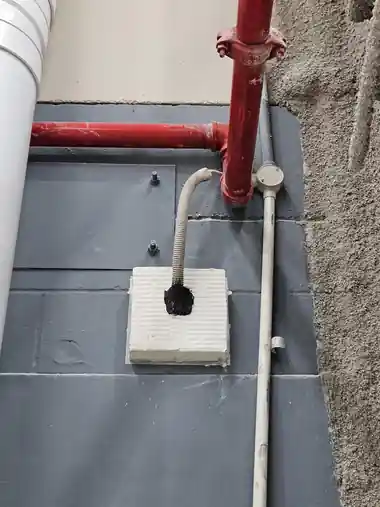
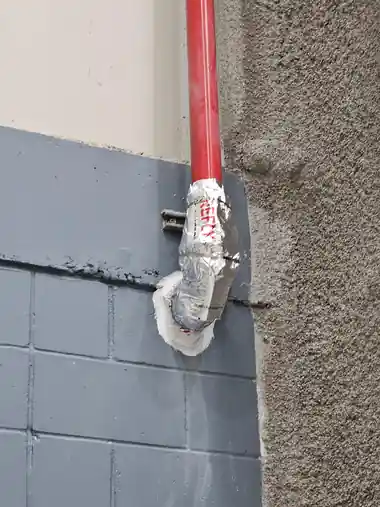
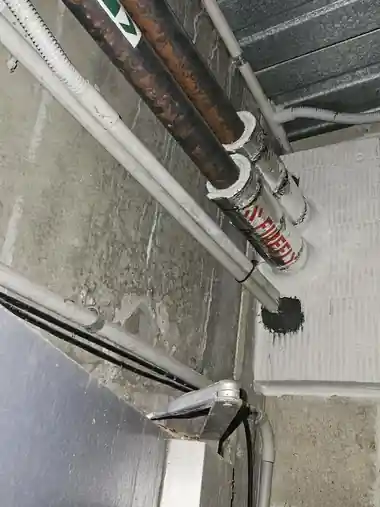
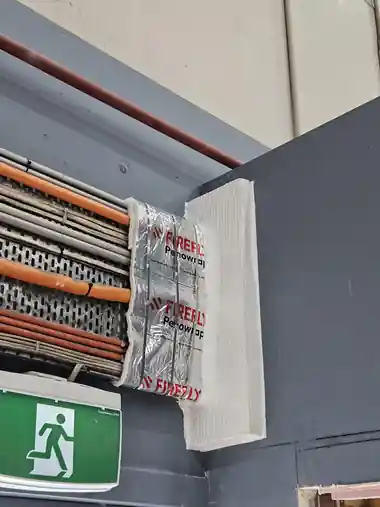
Other work includes stack pipes fire stopped at slab level, sprinkler pipes sealed through fire-sprayed soffits, riser wall batt seals in commercial carparks and fire-rated service enclosures, each one logged in the project's passive fire register.
Why builders use Ary Fire for passive fire
- Specialist passive fire contractor: we install the systems, we are not a product supplier.
- Tested systems matched to each service and substrate.
- Every penetration numbered, photographed and logged in a passive fire register.
- Remediation of existing non-compliant penetrations.
- Installation certificate for your certifier and fire safety statement.
- Intumescent coatings and vermiculite fire spray available on the same job.
Areas we cover
We work across Sydney, including the CBD, Sutherland Shire, Parramatta, Penrith, Campbelltown, Blacktown and Liverpool, plus regional NSW, Canberra and Melbourne. Local pages: fire protection Parramatta and passive fire Sutherland Shire.
Common questions
What is passive fire protection?
Passive fire protection is the built-in fire safety of a building: fire-rated walls, floors and ceilings that form compartments, plus the penetration seals, coatings and fire spray that keep those compartments intact. It works without needing to be switched on.
What is a fire-rated penetration seal?
A penetration seal closes the gap where a pipe, cable, duct or conduit passes through a fire-rated wall or floor, using a system tested for that service and substrate so the wall or floor keeps its FRL.
What systems do you use?
We install tested systems from Trafalgar (FyreCOLLAR, FyreFLEX, FyreBATT, SuperSTOPPER), Firefly barriers and curtains, and Promat boards and mortars, chosen to suit each penetration.
Do you provide a passive fire register?
Yes. Every penetration is numbered, labelled, photographed and logged with its location, service, system and FRL, and the register is handed over with an installation certificate.
Can you fix existing non-compliant penetrations?
Yes. We audit and remediate missing or non-compliant seals in existing buildings, then log the rectified penetrations in a register for your certifier or fire safety statement.
How much does penetration sealing cost?
It depends on the number and type of penetrations, the wall and floor types, the FRL and access. Send your drawings, a penetration schedule or photos and we will come back with a fixed price.
Need penetrations sealed and certified?
Send your drawings, a penetration schedule or a few photos. We'll come back with a fixed quote, and a passive fire register and installation certificate at handover.